A central kitchen, a fried snack maker, or a frozen vegetable plant that processes produce by hand usually finds that labor grows with every added step. The automatic vegetable processing line for commercial production joins washing, peeling, cutting, blanching, draining, and drying, and each machine removes a manual task. This article explains how the connected line lowers the food production labor cost.
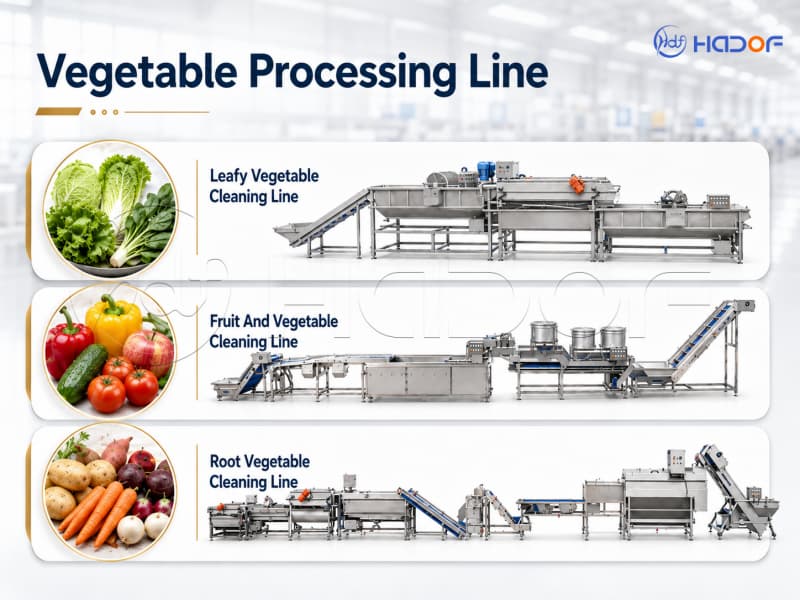
How Does the Line Replace Manual Preparation?
Manual preparation assigns workers to wash, peel, cut, and dry produce, and each handoff adds time. The vegetable processing line with washing and cutting moves product from the washer to the cutter and the blancher on belts, so one team supervises a flow that once needed several hands. This change removes the lifting and carrying from the food handling step.
How Does Continuous Flow Cut Labor?
A continuous line keeps product moving instead of waiting in tubs, so workers spend time on inspection rather than moving material. The automatic line for fried and frozen production feeds the fryer or the IQF tunnel directly, which removes batch loading. A balanced flow keeps the food manufacturing labor steady and low.
How Does the Line Connect Washing, Blanching, and Drying?
The line links each machine with a matched height and speed, so the washed product reaches the blancher and the dryer without a manual handoff. A smooth connection prevents the pile-ups that force workers to handle wet produce. This layout keeps the food processing system efficient and the team small.
How Should a Buyer Match the Line to the Output?
A buyer matches the line capacity to the daily output, because an oversized line wastes floor space and energy. A small plant can start with washing, cutting, and draining, then add blanching or freezing as orders grow. This match keeps the food machinery investment proportional to volume.
How Does Automation Shift Workers to Higher-Value Tasks?
Automation changes the kind of work a team does, not only the number of people on the floor. When the line handles washing, cutting, and drying, the workers move to inspection, sorting, and packing, where judgment still adds value. This shift removes the repetitive lifting and carrying from the food handling routine and keeps the staff focused on quality. A plant that plans this reassignment before the equipment arrives gains the full labor saving. This staffing change is part of the food production return that an automatic line delivers.
How Should a Factory Verify the Supplier?
Vegetable processing rewards a supplier that offers layout and service support, because the line must fit the workshop. You can review the vegetable processing line manufacturer before a purchase, and that review shows the engineering and spare parts. A measured plan turns the food machinery decision into a dependable labor saving. A related quick freezer for a vegetable processing line completes the same processing line.
Conclusion
An automatic vegetable processing line reduces labor costs by joining washing, cutting, blanching, and drying into one continuous flow that removes manual handling. These connections keep the food production line efficient and the team lean. If you have interests, you can learn more about https://www.friedfoodsolutions.com/vegetables-processing-line/